Showing posts with label Satellite. Show all posts

Friday, November 26, 2010

Saturn's Atmosphere has a Lot of Oxygen

Moon Rhea
A recent study found that Saturn's atmosphere turned out to contain oxygen and carbon dioxide that a lot. The aircraft from NASA's Cassini has detected the atmosphere when it flew toward the moon Rhea in March last. This discovery also marks the first for an atmosphere rich in oxygen content on the Saturn satellite.

Atmosphere containing oxygen are known to exist in the natural satellites in our solar system. For example, Europa and Ganymede, two of Jupiter's moon, is also rich in oxygen content in the atmosphere. "We have seen this before in the planet Jupiter, and we have confirmed that there is oxygen in the atmosphere of Saturn's satellite," said study leader Ben Teolis of the Southwest Research Institute in San Antonio, Texas.

NASA's Hubble Space Telescope has detected oxygen levels in the atmosphere on the moon Europa and Ganymede in the 90's. In both satellites of Jupiter, the oxygen out of the water ice surface, which is divided into hydrogen and oxygen under the original particles from Jupiter.

Sunday, March 21, 2010

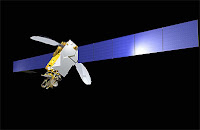
EchoStar-14 Satellite was Launched in Russia

Russian Space Agency has announced the launch of a communications satellite owned by the United States on Saturday. The satellite was successfully orbited through the base Baikonur Cosmodrome, Kazahkatan. EchoStar Satellite-14 are brought together with the Proton-M rocket, and successfully lifted off precisely at 21:21 Moscow time.

EchnoStar-14 satellite and the Proton-M rocket ride on a spaceship who weighs nearly 6.3 tons of rocket drive it with Briz-M. Expected to drive separate from the rocket and the Briz-M was in position to 119 degrees West in geostationary orbit, or about nine hours after launch.

Launch of EchoStar-14 satellite is a belonging of Loral Space Systems, the satellite TV company DISH Network satellite Americans. Expected with the presence of EchoStar-14 satellite is able to provide quality service with high image definiton (HD) for 15 years, for customers in North America.

Russia and the U.S. have conducted cooperation in International Launch Services, including the launch of a satellite with U.S. telecommunications company, EchoStar. This satellite is the second after Russia launched a commercial rocket in 2010. Baikonur Cosmodrome is the launch of one of the largest space in the world, in this place of Sputnik 1, the first earth satellite was launched.

Thursday, July 2, 2009

Satellite Internet Services with High Speed Data Access

Mini dish antenna satellite internetInternet is one of the facilities that are important in running the economy and through the internet we can communicate directly with the family or a friend with a low cost. Internet provides a lot easier for us to communicate through text or video. Many facilities that can be utilized from the internet such as online shopping, e-learning, chat, read the article, news and more. In many countries, especially in the big city network has provided Internet access at speeds that vary using Dial-up, DSL, T1, and so forth.

Perhaps for those who live in rural areas internet network is not available, this can occur because the region where you live does not have the infrastructure to support network and it is difficult to be reached overland. But at this time you need not disappointed because the internet that you want can be realized in your home by using satellite internet service provided by wildblue. Computer at home or the office you will be connected to the Internet using a satellite that has a high-speed access up to 1.5 Mbps.

WildBlue Internet is easy to install at home or in your office, the device support to access the Internet via satellite consists of a mini-dish antenna and satellite modem that has been provided by WildBlue. Minimum requirements that must be available on your computer is to have ethernet card and operating system Windows or Macintosh.

Service from satellite internet is suitable for you who want to get the internet in rural areas that are difficult to reach by land network or want to increase access speed 30 times faster than dial-up. Satellite Internet offers data access to high speed which varies according to the package you select, for download speeds up to 1.5 Mbps and upload speeds up to 256 Kbps. So take advantage of satellite internet service facilities for the needs of your life by using high-speed broadband access.

Wednesday, January 28, 2009

Satellite Service to Watch TV

Benefits and uses satellite is very much in daily life such satellites used for communications between the islands, countries and continents. One of the services provided by the satellite is to broadcasting television programs. Satellite broadcasting service can be accessed through the air intrerface using an antenna and distributed through the network cable as the cable TV network or computer network (internet).

Watch TV programs use satellite services for broadcasting TV programs is to provide the high quality image and sound. In order to watch TV programs using a satellite service, the necessary decoder / receiver that works to change the digital signal to analog signal.

In addition to watching TV programs from the satellite through the website may have previously installed a software application for this satellite TV program. This software is used as the interface that works for the conversion analog code to digital code so that TV programs can be displayed. Today, I find the service that provides broadcasting television programs via satellite that is DirectTV and also DirectTV offers services program to business.

To be a customer service TV program, DirecTV specials offer with more than 256 channels program of interest to you watch . Communication satellite for broadcasting television programs to provide many benefits, not just for watch but also can be used to monitor economic developments like the businessman who have a international target . Satellite reach very far and can reach areas that do not have land infrastructure.

So enjoy satellite TV in your home with the programs that offer interesting.

Monday, October 13, 2008

Highly Eliptical orbit (HEO)

HEO is an orbital satellite that is more than 36.000 Km from the surface bumi. This orbit is the most distant orbital distance from the other. Highly Eliptical orbit was developed by Russia.

HEO

Sunday, October 5, 2008

Geostationer Orbit (GEO)

GEOGeostationer orbit is the orbital geo-syncronous that are right on top of the Earth equator (0 ° latitude), with the same orbital with zero. From the surface of the Earth, the objects are in orbit geostationer will appear to be silent (not moving) in space because of orbital objects Period circumnavigate the Earth with the rotation of Earth Period. Orbit is highly desirable by the operator-made satellite operators (including satellite communications and television). Because of the location of the constant latitude 0 °, the location of the satellite only be distinguished by the location of the longitude of Earth.

Geostationer ideas for use in satellite communications published in 1928 by Herman Potočnik. Geostationer orbit popular the first time by science fiction author Arthur C. Clarke in 1945 as a useful orbit for satellite communications. Therefore, the orbit is sometimes referred to as the Clarke orbit. Belt also known Clarke term that indicates the space of 35,786 square kilometers sea level on average above the equator where the orbital geostationer approach can be achieved. Geostationer orbit is very useful because it can cause a satellite processing seems to dwell on one point on the surface of the Earth rotates. As a result, an antenna can point in one direction and keep in touch with the satellite. Satellites orbit with the clockwise rotation of Earth at a height of about 35,786 km (22,240 statute miles) above the surface.

Although the orbital geostasioner can maintain a satellite is still in place on the equator, can cause perturbation orbital satellite slowly move from location geostationer. Perturbation orbital is a phenomenon in which the satellites orbit changed due to one or more external influences such as gravity anomaly distribution of the earth, drag-style interference from the moon, meteor impact or other objects, or solar radiation pressure. Satellites to make do with the correction maneuvers, which are controlled by the station on Earth, this maneuver is known as the maneuvers north-south (North-South Correction) and maneuvers west-east (East-West Correction).

These maneuvers using small rocket-missile (thrusters) to the satellite body and the direction set in accordance with the direction of the correction. This small rocket ignition consumption fuel will be brought from earth satellites as a stock. If the stock is exhausted, then drop the age of satellite operations - because when he deviate from orbit, no longer the way for the operator of the earth for corrections and return it to where it should be.

Monday, September 15, 2008

GeoSyncronous orbit (GSO)

GeoSyncronous orbit is an orbit objects (usually artificial satellite) with the earth as the center, which has the same Period with the rotation of the earth that day or hour 23.9344. The orbital geometry has half the main axis (semi-major axis) length of 42164.17 km. GeoSyncronous with the orbital satellite will be located above a point on the earth at certain hours. Apart from the time the satellite will appear to shift relative to that point. If the satellite GeoSyncronous have the perfect circle of orbit and orbital equator line with the views of the earth, the satellite will appear to be silent, so-called the orbital Geostationer.

GSOIn 1974 satellite weather SMS 1 (Synchronous Meteorological Satellite) satellite was launched as a functioning GeoSyncronous send some pictures to a television station. After several experimental satellite in 1975, it changed into geostasioner orbit.

Friday, September 12, 2008

Medium Earth Orbit (MEO)

Telecommunication services and the demands of the mobile cellular systems and wireless. From here appear discourse satellite Medium Earth orbit (MEO) and LEO [Low Earth Orbit]. Unlike satellite Geo, which sit on the distance of 22,300 miles above the Earth, LEO satellites gather in the distance about 400 miles only, and the MEO orbit 10,000 km distance between the 36.000 Km. Distance lower, need more advanced technology, allows people to communicate across the world with a mobile phone pocket size. Because of LEO and MEO satellites close together, a network coverage is needed to create the equivalent satellite Geo.

MEOThrough the network of satellites that orbit the track orbital, this system is possible to deliver sound quality with a better effect without resonance. but also how, satellite Geo is still better and more suitable for transmission that has a wide spectrum such as television.

Tuesday, September 9, 2008

Low Earth orbit-LEO

Low orbit is an orbit around the Earth between the atmosphere and the Van Allen radiation belt, with a low inclination angle. These limits are not defined exactly, but usually under 1,500 km above the surface of Earth. This orbit is usually located under the intermediate circular orbit (ICO) and far below the geostationary orbit. Orbital lower from here is not stable and will fall quickly because of the atmosphere of friction. A higher orbit from the orbital This is the subject of electronic failure early because of strong radiation and collecting cargo. Orbital inclination angle with a higher usually called a polar orbit. Objects in low Earth orbit to meet

Low Earth orbit-LEOthe gas atmosphere in the thermosphere (about 80-500 km above) or exosphere (approximately 500 km above), depending on the altitude orbit. Most of the flight space probe has been in LEO, including all the various space shuttle and space station mission; one exception is the suborbital test flights as early Mercury Project and the SpaceShipOne flight (which did not achieve the intended LEO), and Project Apollo missions to the Moon (which passes LEO ).

Wednesday, August 20, 2008

Communications Satellites

The basic concept of communications satellites:

o Earth Station
Earth station is the radio communications station that is located on the ground and functions to communication with the space station.

oSatellite Communication
The communication between the satellite earth station through space or through artificial earth satellite passive.

oSatellite Links
It is a point of communication between earth station via a satellite link, and consists of the earth to the satellite (up-link) and a link from the satellite to the earth (down link). Station earth connected to the central switching from the communications network connecting via the link terresterial.

Wednesday, July 9, 2008

Global Positioning System (GPS)

satellite-GPSGPS is the Global Positioning System navigation equipment that is used to determine the position at any time and anywhere by using satellites. Function of the GPS satellites which are always / continuously send or emit code information used to know / identify the location on the earth.

Segments of the GPS:
space segment, user segment, and control segment.


Space segment
Consists of 24 satellites (21 active and 3 as a backup), each of which is the orbit distance with 11,000 miles above the surface of the earth.

User segment
Consists of tools recipient GPS signals from satellites.

Control segment of the earth from the station that serves as a checker to ensure that the GPS satellites to work properly. Examples in everyday life, used to know the search for the presence / position of someone, help in finding the existence of a car on the highway, to know the position of the aircraft, to know the speed of an object, and so forth.

Wednesday, June 25, 2008

Multiple Access of INTELSAT Satellite

 INTELSATSatellite INTELSAT access using the 2 methods, namely TDMA and FDMA. Time Division Multiple Access with Direct Digital Interface (TDMA / DDI), Digital Speech Interpolation (TDMA / DSI) and Digital Speech Interpolation without.

TDMA is the method used to overcome the back-off and also more flexible in sharing between the satellite to the station and channel. With TDMA, the station can be full access to the satellite transponder with a time slot, so there is no intermodulation strengthening can be maximum, and although troughput high number of multiple access.

Method Frequency Division Multiple Access (FDMA) can be used for analog modulation (FM) or digital modulation (PSK). Location frequency used satellite Internet is the C-band and Ku-Band.

Saturday, June 7, 2008

INTELSAT Satellite

INTELSATINTELSAT Satellite was first launched on 28 June 1965, which was placed in geostationary orbit over the Atlantic ocean. Lunch and operated as the orbit Early Phase (LEOP) headquartered in Washington DC. To access the INTELSAT satellite, INTELSAT has the characteristics that vary for each earth station with the station type:


Standard A has a nominal G / T 35.0 dB / K and the operating frequency band at 6 / 4 GHz for international service.

Standard B has a nominal G / T 31.7 dB / K and the operating frequency band at 6 / 4 GHz for international service.

Standard C has a nominal G / T 37.0 dB / K and frequency bands operating in the 14/11 or 14/12 GHz GHz for international service.

Standard E, the Standard E-1 has a nominal G / T 25.0 dB / K, Standard E-2 has a nominal G / T 29.0 dB / K, Standard E-3 has a nominal G / T 34.0 dB / K and the operating frequency band at 14 / 11 GHz or 14/12 GHz for services to Intelsat Business Services (IBS), Intermediate Data Rates (IDR) international, Internet Trunking Service (ITS) and VSAT. using Turbo coding with QPSK / OQPSK (Standard E-1).

Standard F, Standard M-1 has a nominal G / T 22.7 dB / K, Standard F-2 has a nominal G / T 27.0 dB / K, Standard M-3 has a nominal G / T 29.0 dB / K and the operating frequency in the band 6 / 4 GHz for services to Intelsat Business Services (IBS), Intermediate Data Rates (IDR) international, Internet Trunking Service (ITS) and Turbo coding using VSAT with QPSK / OQPSK (Standard F-1).

Standard G, does not have a specific G / T segment for satellite Internet access services to domestic and international. This standard allows the use of the G modulation techniques and access to other, that is not in the Standard A and M and only the general characteristics of the RF limits.

Standard H, Standard H-2 has a nominal G / T 15.1 dB / K, Standard H-3 has a nominal G / T 18.3 dB / K, Standard H-4 has a nominal G / T 22.1 dB / K and the operating frequency in the band 6 / 4 GHz for services to Intelsat Business Services (IBS), Intelsat DAMA, the Internet Trunking Service (ITS) and Turbo coding using VSAT with QPSK / OQPSK.

Standard K, K-2 Standard has a nominal G / T 19.8 dB / K, K-3 standards have nominal G / T 23.3 dB / K, and in the operating frequency band, 14/11 or 14/12 GHz for services to Intelsat Business Services (IBS), the Internet Trunking Service (ITS) and Turbo coding using VSAT with QPSK / OQPSK.